
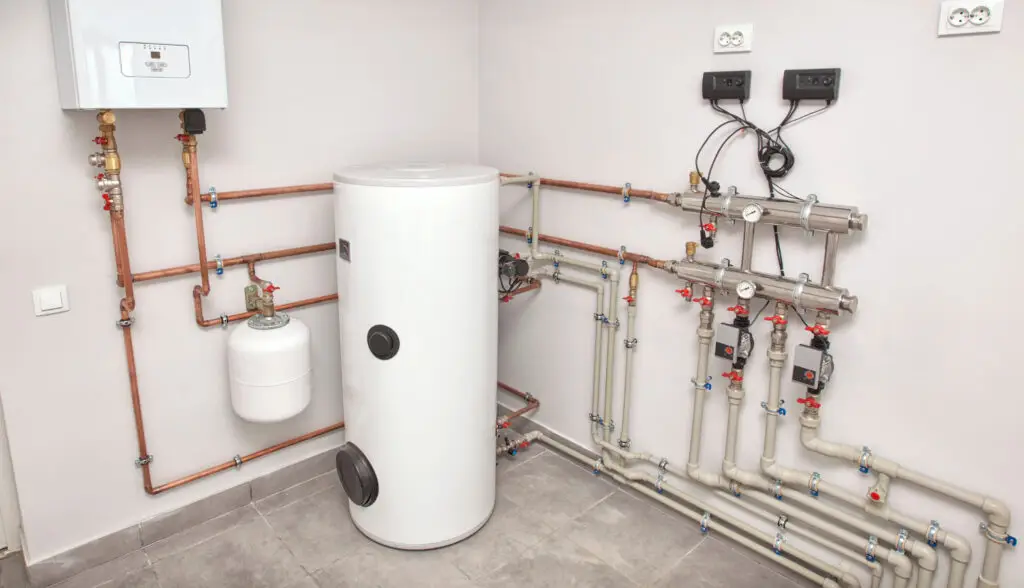
The first truly cold morning of the year has a way of exposing a tired water heater. The shower that ran hot all summer turns lukewarm halfway through, and you’re left wondering whether the unit in your garage will make it to spring. Anyone who was in the Tomball or Magnolia area in February 2021 remembers how a hard freeze caught thousands of Houston-area homes off guard, and how long the repairs took. That February is a big part of why fall water heater maintenance gets taken seriously around here.
Here’s the short answer to whether your water heater is ready for winter: it probably is, if you give it about an hour of attention this fall. That’s why fall water heater maintenance sits right at the top of any smart October to-do list around here. Flush the sediment, test the temperature and pressure relief valve, check the anode rod, set the thermostat near 120 degrees, and insulate anything in unheated space. Do those five things before the first cold snap and your heater will recover faster, run cheaper, and be far less likely to quit on a 30-degree morning.
If you’d rather have a professional handle the checkup, the team at First Service Plumbing is happy to take a look and walk you through what your unit needs, with no pressure and no surprises. Most fall water heater maintenance visits take about an hour start to finish.
Your water heater works harder in winter than at any other time of year. Once cold fronts roll through, the groundwater feeding your tank gets colder, so the burner or elements run longer to reach the same set point. A unit already struggling with sediment shows it first on the coldest week of December, right when every plumber’s schedule is packed. Booking fall water heater maintenance now is how you stay off that December list.
Fall is the comfortable middle ground. October in Tomball still brings 80-degree afternoons, parts are easy to get, and there’s time to fix small problems before they become emergencies. Winter water heater prep done now also protects against a freeze risk Texans no longer treat as hypothetical, since garage and attic heaters common in newer construction around Magnolia and northwest Harris County sit in unconditioned space that a multi-day freeze can reach. Freeze exposure is the newest reason fall water heater maintenance matters in Texas.
Each item on this fall water heater maintenance checklist targets one of the most common reasons heaters fail or underperform in winter.
Much of the water in the Tomball and Magnolia area runs hard, carrying dissolved calcium and magnesium. When that water is heated, the minerals settle on the bottom of the tank as sediment. On a gas heater, that layer sits between the burner and the water, so the unit burns more gas to deliver the same shower. You’ll often hear it too, a rumbling or popping sound. That noise is the clearest sign your fall water heater maintenance should start with a flush.
Flushing means connecting a garden hose to the drain valve, shutting off the cold supply, and draining the tank until the water runs clear. Once a year is standard, and homes with very hard water benefit from every six months. If your tank hasn’t been drained in years, be careful: old drain valves can clog or refuse to reseal, which is a good reason to book a professional water heater flush Tomball plumbers can finish safely rather than gamble on a stuck valve. If mineral buildup is a constant battle in your home, a whole-home water treatment system addresses the cause instead of the symptom and extends the heater’s life, and our guide to choosing a filtration system walks through the options.
The T&P valve releases water if pressure or temperature inside the tank climbs too high. Testing it is simple: put a bucket under the discharge pipe, lift the lever for a few seconds, and let it snap back. Water should rush out and stop when the valve closes. If nothing comes out, or it keeps dripping afterward, the valve needs replacement, and that’s a job for a licensed plumber, because a seized valve turns a routine failure into a dangerous one. The lever test is the fastest item in fall water heater maintenance.
Inside every tank-style heater hangs a sacrificial anode rod, usually aluminum or magnesium, that corrodes on purpose so the steel tank doesn’t. Once the rod is gone, rust goes to work on the tank itself, and a rusted tank can’t be repaired. Rods typically last three to five years, less in hard water. Pulling one requires breaking loose a large hex fitting on top of the tank, so most homeowners fold this into a professional visit. If your heater is more than three years old and the rod has never been inspected, this is the fall water heater maintenance item to prioritize.
Many heaters ship set at 140 degrees, hotter than most households need and hot enough to scald in seconds. Dialing back to 120 slows mineral buildup, protects kids and older family members, and trims your bill. Water heating accounts for about 18 percent of a typical home’s energy use, according to the U.S. Department of Energy, so the set point matters daily. It’s the one piece of fall water heater maintenance that keeps paying you back every month of the year.
If your heater lives in the garage or attic, wrap the first several feet of hot and cold piping in foam insulation, and consider a blanket for older tanks that feel warm to the touch. This is cheap freeze protection as much as efficiency, because uninsulated lines in unconditioned space are among the first casualties of an extended freeze, and a burst line at the heater floods a garage fast. Insulation is the cheapest fall water heater maintenance you can buy.
Homeowners can confidently handle most winter water heater prep: the thermostat adjustment, pipe insulation, the T&P lever test, and a routine flush on a newer unit with a cooperative drain valve. Those four cover a good share of fall water heater maintenance.
Call a pro for anything involving gas connections, a drain valve that won’t open or reseal, anode rod replacement, a failed T&P test, or any leak from the tank body. The same goes for rusty water or a rotten-egg smell, which usually points to a failing rod. A licensed Magnolia plumber or Tomball plumber can diagnose those in one visit, and catching them in October beats discovering them in January. Those are exactly the calls fall water heater maintenance is meant to prevent.
Tankless units don’t collect sediment in a reservoir, but hard water scales up their heat exchangers instead, so they need an annual descaling flush with a pump and a descaling solution, a service any experienced Magnolia plumber can handle. They’re also more exposed in a freeze, especially wall-mounted exterior units. Their built-in freeze protection only works while the power is on, a lesson many Texas homeowners learned during the 2021 outages. If you have a tankless heater, descale it this fall and learn how to drain it before a forecast hard freeze. Tankless owners need different fall water heater maintenance, not less of it.
A well-maintained tank heater generally lasts eight to twelve years. If yours is past that range and showing rusty hot water, moisture around the base, rumbling that persists after a flush, or a pilot that won’t stay lit, put your money toward replacement instead of repairs. The serial number sticker shows the manufacture date if you’re unsure. Replacing on your schedule, not the heater’s, lets you compare sizes and efficiency ratings calmly. Sometimes the honest outcome of fall water heater maintenance is a replacement quote rather than a repair, and hearing that in October is a gift. First Service Plumbing helps Tomball and Magnolia homeowners choose the right unit and offers financing options that make an unplanned replacement easier to absorb.
Once a year for most homes, every six months with very hard water and no softener. A professional water heater flush Tomball crews handle typically takes under an hour, and it’s the anchor of any fall water heater maintenance visit.
Keep it at 120 degrees year-round. Raising it in winter doesn’t speed recovery; it just increases scald risk and energy use. The 120 setting belongs in every fall water heater maintenance routine.
Insulate exposed lines, open cabinet doors on plumbing walls, and know where the shutoff is. In an extended outage, draining the tank and lines protects the system, and a Tomball or Magnolia plumber can walk you through it by phone.
Yes. Descale it annually and protect it from freezing, since its freeze protection fails without power. Build both into your fall water heater maintenance plan.
First Service Plumbing is a plumbing company based in Tomball, serving Tomball, Magnolia, The Woodlands, Spring, and the greater Houston area with water heater installation and repair, water treatment, drain cleaning, and more. If your heater is due for fall water heater maintenance, or is older than you’d like heading into the cold months, reach out to schedule a visit. We’ll give you an honest read on its condition, handle the winter water heater prep you’d rather not tackle yourself, and make sure the first cold morning of the season is nothing but a hot shower.

Ron Murley is the owner of First Service Plumbing & Drains, a family-owned plumbing company based in Tomball, Texas. With more than twenty years in the trade, Ron and his licensed, insured team handle the full range of residential plumbing work, including drain cleaning, sewer inspections, water heater installation for both tank and tankless systems, gas line services, pipe and water line repair, fixture installation, and water treatment. The company serves Tomball and the greater Houston area, with customers in Magnolia, Spring, The Woodlands, Cypress, and dozens of surrounding communities. Ron built the business around putting customer service first, and reviewers regularly describe his work as thorough and professional, noting that he takes time to investigate a problem properly before recommending a fix. He believes in personalized attention, clear pricing, and dependable results.